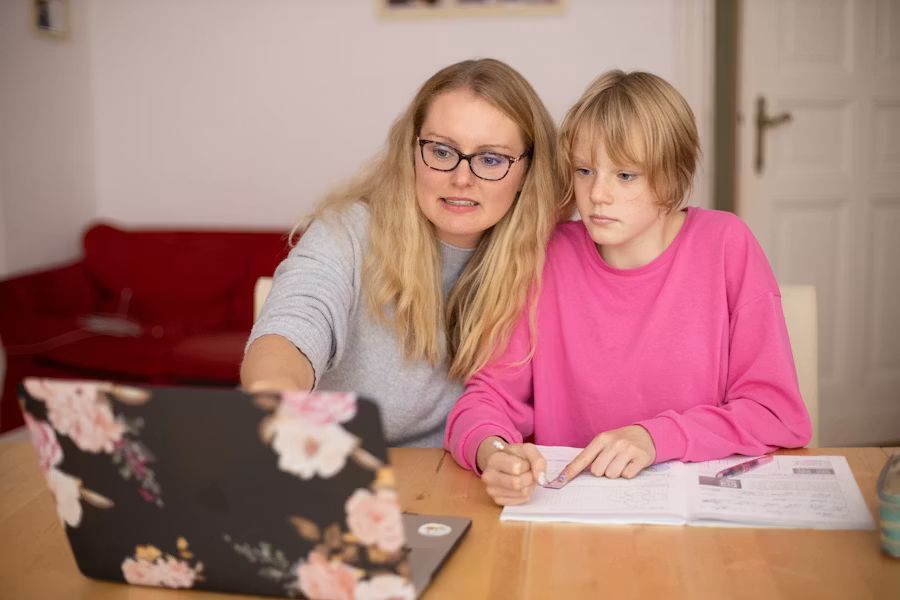
Overcoming Common Challenges in Online Homeschooling: Practical Solutions for Parents
This is a subtitle for your new post
Key Takeaways
- Online homeschooling challenges are common but manageable with the right strategies.
- Structure and routine help students stay organised and productive.
- Effective homeschooling motivation strategies support engagement and confidence.
- Balancing screen time with offline activities improves concentration.
- Social interaction remains important through extracurricular and community activities.
- Flexible learning approaches help address different learning styles.
- Successful homeschooling relies on patience, adaptability and realistic expectations.
So, how do you overcome homeschooling challenges?
Online homeschooling has, over the last few years, become an increasingly popular choice for families who are looking for flexibility, personalised learning and greater involvement in their child’s education. While this educational model offers many benefits, there are also a few online homeschooling challenges that parents and students must learn to navigate.
From maintaining motivation to managing schedules and screen time, these challenges are common for families transitioning into home-based education. The good news is that with practical planning and realistic expectations, most homeschooling difficulties can be overcome with ease.
Why Online Homeschooling Can Be Challenging
Moving from a traditional classroom to a home learning environment is a major adjustment for parents and children. Parents are required to take on new roles as facilitators, supervisors or learning coaches while still balancing their own work and family responsibilities.
Some of the most common remote learning challenges include:
· Managing academic schedules
· Supporting children without formal teaching experience
· Maintaining motivation without classroom interaction
· Balancing family responsibilities as well as schooling
Understanding the realities helps parents approach online learning for homeschool students with confidence and preparation.
Challenge #1: Maintaining Structure and Routine
Why Structure Matters
Children thrive on routine. Without the natural structure of a traditional school day, it can be easy for learning time to become inconsistent or unfocused. Consistent routines help learners develop discipline, focus and confidence.
Practical Solutions
Parents can strengthen managing homeschool schedules by bringing some simple structures to the school day:
· Create a daily learning timetable
· Set consistent start and finish times
· Schedule regular movement and snack breaks
· Use planners or visual schedules for younger learners
· Review the schedule weekly and adjust if needed
These routines help students stay organised and reduce stress for parents.
Challenge #2: Keeping Students Motivated
Understanding Motivation in Online Learning
Without daily classroom interaction, some students might struggle to stay engaged. Motivation can drop when lessons feel repetitive or when learners begin to feel disconnected from their peers.
Practical Solutions
Effective homeschooling motivation strategies focus on making learning meaningful and achievable.
Parents can try:
· Setting short-term learning goals
· Celebrating the small victories
· Incorporating a child’s interests into their lessons
· Creating milestone rewards for when they complete tasks
Motivation increases when students can begin to feel ownership over their learning.
Challenge #3: Managing Screen Time
Online learning naturally increases the exposure to screens. While digital learning tools are valuable, too much screen time can lead to fatigue, reduced concentration and irritability.
Balancing digital and offline learning is a must, and parents should strive for it.
Practical ways to manage screen time include:
· Alternating online lessons with offline activities
· Encouraging creative projects like drawing, building or creative writing
· Scheduling outdoor play or exercise
· Building screen-free breaks into the daily routine
Many parents exploring this balance learn that managing screen exposure is an important part of digital learning success, particularly when considering the benefits and risks associated with children’s screen time in modern education.
Challenge #4: Balancing Work, Home and Teaching Responsibilities
Balancing multiple roles is probably one of the most common homeschooling difficulties faced by parent. Managing work commitments, household responsibilities and teaching support can quickly become very overwhelming.
Practical Solutions
Parents can reduce their stress by introducing flexibility and shared responsibility. Some helpful strategies include:
· Creating flexible learning blocks instead of rigid schedules
· Sharing responsibilities with other caregivers
· Encouraging independent learning activities
· Using structured lesson platforms
Structured digital programmes can reduce planning pressure for parents. Families exploring options often consider structured online homeschool curriculum solutions.
Challenge #5: Social Interaction and Peer Connection
Social development is one concern about online learning for homeschool students. Parents often stress that children might miss out on friendships or teamwork opportunities. However, social connection can happen in many different ways outside of traditional classrooms.
Practical Solutions
Students can build relationships through:
· Homeschool learning groups or co-ops
· Sports teams and extracurricular activities
· Online collaborative projects
· Community youth programmes
Explore how homeschooling differs from traditional classroom environments to understand more.
Challenge #6: Supporting Different Learning Styles
Each and every child learns differently. Some students thrive with visual resources. Others prefer hands-on activities or verbal explanations. There isn’t a one-size-fits-all approach as this can create frustration, particularly in digital environments.
Practical Solutions
Parents can adapt lessons by:
· Using videos, diagrams and visual aids
· Incorporating discussions and storytelling
· Adding hands-on projects and experiments
· Allowing creative presentation options for assignments
When learning methods are flexible, students can feel understood and supported.
Creating a Positive Homeschool Learning Environment
The physical learning space also influences productivity and motivation. Parents don’t need elaborate setups. Instead, a few simple steps can make a big difference:
· Create a dedicated study space
· Keep learning materials organised and within reach
· Minimise noise and distractions
· Encourage independence and responsibility
A calm, predictable environment helps children focus and build confidence.
When to Adjust Your Homeschooling Approach
Homeschooling isn’t static. As children grow and their learning needs evolve, parents might need to change routines, their teaching methods or their resources.
Parents should consider changes when:
· A child consistently struggles with lessons
· Motivation declines for extended periods
· The schedule feels overwhelming
Exploring new tools or structured online schooling models can help families refine their approach. Many parents also discover that flexible online learning environments offer benefits such as personalised pacing, structured academic support and greater adaptability for different learning needs.
Final Thoughts: Building a Sustainable Homeschooling Routine
Homeschooling is a journey that evolves over time. It is important to know that every family experiences challenges along the way. However, these obstacles are merely part of the learning process and can be overcome.
By developing routines, supporting motivation, encouraging social interaction and adapting to each child’s unique needs, parents can successfully overcome online homeschooling challenges and create a positive learning experience.
The key to long-term success is consistency, patience and flexibility.