Evolve Online School: What mastery looks like in an Online Cambridge School
At Evolve Online School, one of the questions we return to often is simple: How do we know that a student has truly understood?

For us, mastery is not about slowing learning down. It is about making sure students are ready to move forward with confidence.
This aligns closely with the spirit of the Cambridge curriculum, where knowledge, understanding, application, reflection and independence all matter.
“In our Upper Primary and Lower Secondary sections, mastery means that students are not simply exposed to content; they are given repeated opportunities to practise, receive feedback, reflect, improve and try again.” Jo-Anne Buchner, Principal
Designing mastery for the online space
Making mastery work online has required us to be intentional about structure. Lessons and learning tasks are designed to build understanding in stages.
Students move from guided teaching to independent practice, feedback, revision and extension. The online environment allows teachers to make learning visible by tracking submissions, identifying patterns of understanding, and spotting areas where students may benefit from further support.
A key feature of our approach is that learning begins before students enter the virtual classroom. In Upper Primary and Lower Secondary, learners complete preparatory activities that spark curiosity, introduce key concepts and provide a foundation for deeper discussion during lessons. These activities create a shared starting point for learning and allow lesson time to focus on analysing sources, discussing ideas, conducting research, applying knowledge and exploring concepts in greater depth.
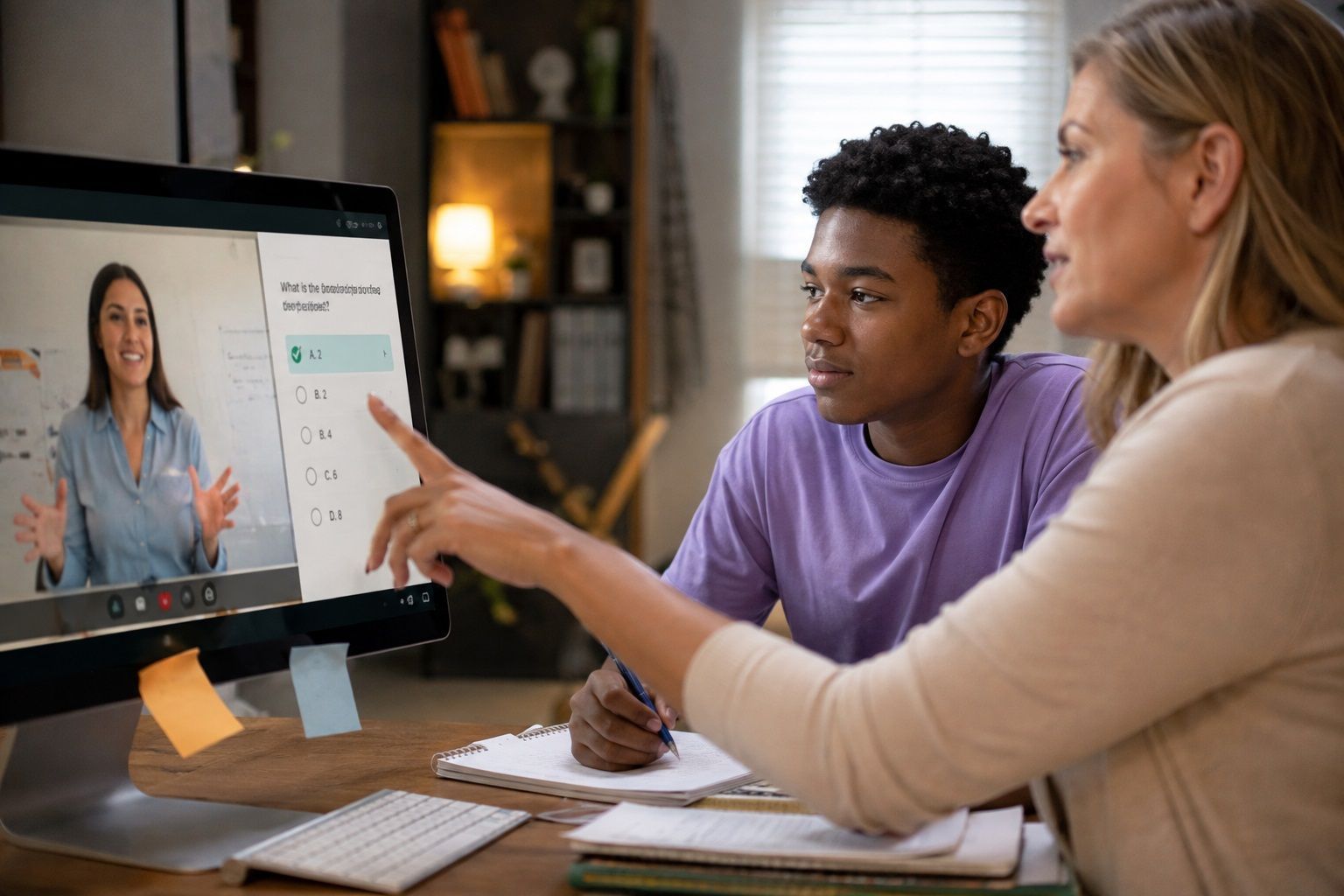
Teachers often use low-stakes, gamified quizzes such as Kahoot! and Blooket to check understanding in real time. These activities provide immediate insight into learners' grasp of key concepts and help determine whether students are ready to move on to independent learning tasks.

Tsholofelo Molotsi and Jessica Hayward – the Lower
Secondary and Upper Primary Phase Co-ordinators.
The learning journey does not end at this point. Once students have explored concepts through discussion, collaboration and formative checks, they move into asynchronous work where mastery becomes most visible.
Feedback as part of the learning journey
One of the most important lessons we have learned is that feedback must be part of learning itself rather than something students receive only at the end of a task.
Students are encouraged to reflect, respond and improve through multiple opportunities to revisit their work. This has helped shift the conversation from “What mark did I get?” to “What do I understand now, and what do I need to improve next?”
Supporting students to become more independent
In an online school, students need more than access to content. They need routines, visibility and support. At Evolve, this means combining live teaching with structured independent work, regular formative feedback and clear follow-up. Learning Coaches and teachers play a key role in helping students manage their pace, remain accountable and understand what progress looks like.
The online environment also provides valuable insight into learning behaviours. Teachers can see when students are engaging consistently, where assignments are overdue, when work has been attempted multiple times, and where intervention may be required. This allows support to be both proactive and personalised.
Extending mastery into the senior years
At Cambridge IGCSE™ and Cambridge International AS Level, the same principles continue, but with a stronger focus on Cambridge assessment expectations. Students need to develop knowledge and understanding, apply what they know, analyse information, explain their thinking and reflect on complex problems.
To support this, Evolve uses Mindjoy as an AI-supported tutor space. Students engage with curriculum-aligned pathways that strengthen knowledge, application, analysis and reflection. One aspect that has been particularly valuable is the way AI-supported prompts encourage students to articulate their reasoning rather than simply search for an answer.
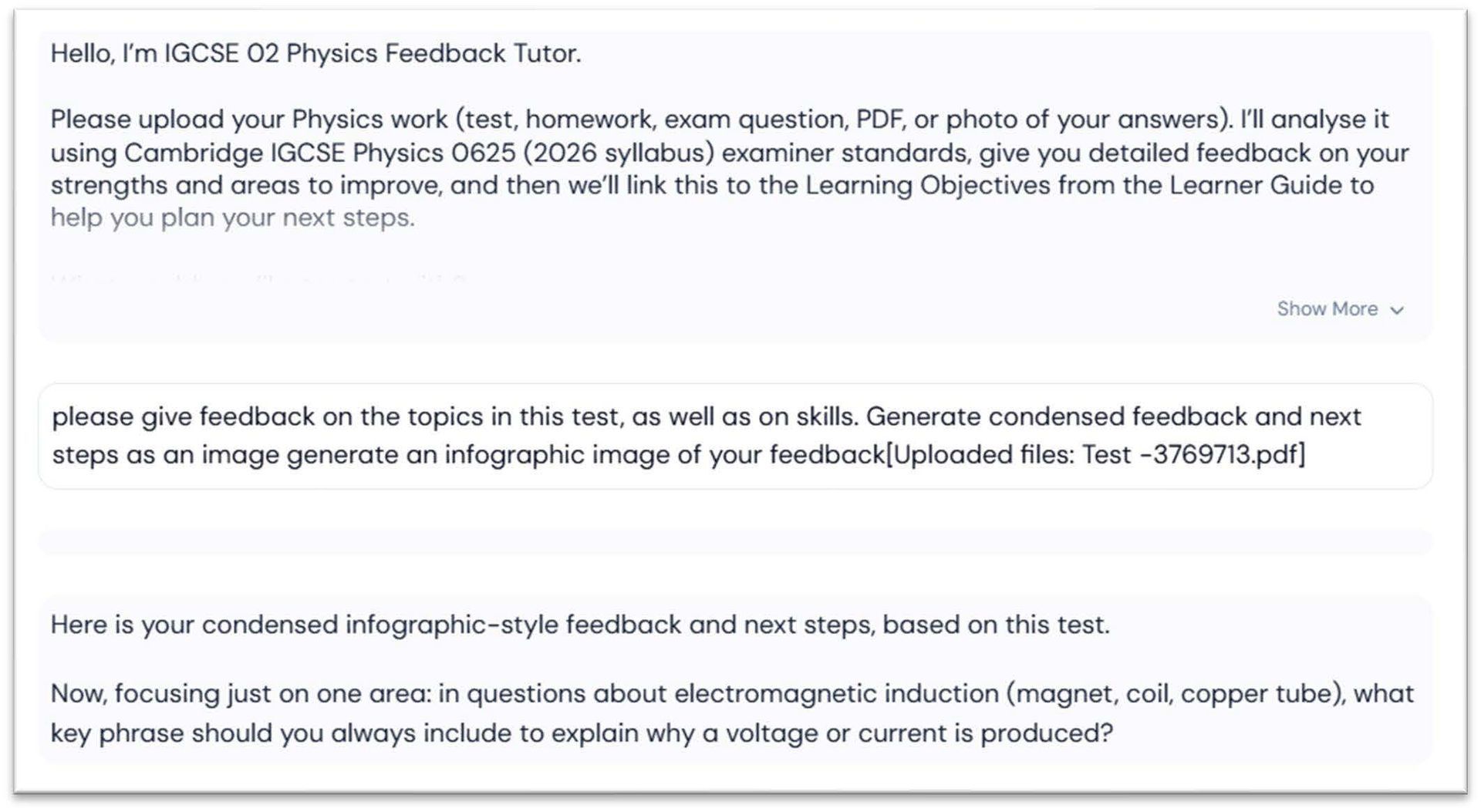
Example of Mindjoy Tutor
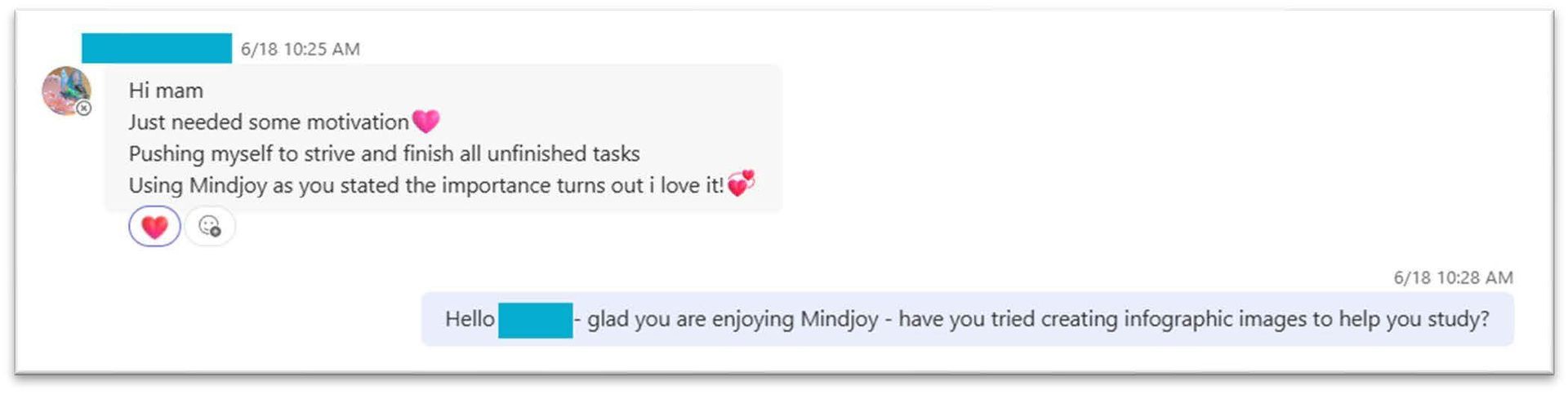
One student reflected that Mindjoy had helped them work through tasks they might previously have left unfinished. More importantly, they found themselves becoming increasingly motivated to continue learning independently. For us, this illustrates the real value of mastery: helping students move from completing tasks because they are required to taking greater ownership of their learning.
Lessons we have learned
Our experience has shown that mastery-based learning can work well in an online Cambridge school when flexibility is combined with structure. The most important lesson is that mastery is not a programme or a platform, but a culture that gives students opportunities to understand deeply, improve meaningfully and grow in confidence over time.
Three practices have made the greatest difference:
- Make feedback part of the learning process, rather than something delivered only at the end.
- Use online tools to increase visibility of learning, not just to deliver content.
- Build regular opportunities for students to reflect on their thinking and act on feedback.
When used thoughtfully, technology can be a powerful enabler of this approach, helping learning to be tracked more closely, feedback to be revisited more easily, and independence to be developed in a supported way. For Evolve, this is what online Cambridge learning makes possible: a learning environment where students are known, supported and challenged, and where progress is measured not only by speed, but by understanding.